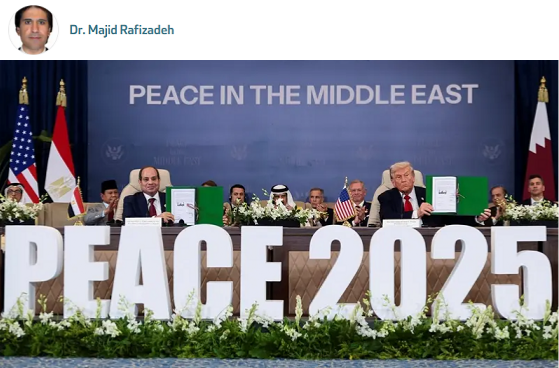
The world is witnessing a moment that may mark a turning point in one of the longest-running conflicts in modern history. Leaders from over twenty nations gathered in Sharm el-Sheikh, Egypt, in a rare summit aimed at ending the war between Israel and Hamas that has spanned more than two years. The summit, co-chaired by US President Donald Trump and Egyptian President Abdel Fattah al-Sisi, was unprecedented in its scope and ambition. The gathering sought not only to establish a ceasefire but also to lay the groundwork for long-term peace in a region where hopes for resolution have often been dashed. The summit's timing, after years of devastating conflict that has left thousands dead and displaced millions, emphasized the urgent need for a new approach rooted in diplomacy, compromise, and humanitarian concern.
The Sharm el-Sheikh summit brought together an unusually broad coalition of international actors, including representatives from the United States, Egypt, the European Union, the Arab League, and other global powers. Despite the absence of Israeli Prime Minister Benjamin Netanyahu, who cited the proximity of a Jewish holiday as the reason for not attending, the summit proceeded with a sense of unity and determination.
The presence of leaders from diverse nations and perspectives demonstrated a shared commitment to ending the bloodshed and fostering a sustainable peace process. While political differences remained, the summit successfully emphasized common ground, particularly the immediate need for a ceasefire and humanitarian relief for the people of Gaza. US President Trump described the summit as a historic breakthrough, highlighting the unprecedented cooperation displayed by the parties involved, while President al-Sisi underscored Egypt's role as a mediator and guardian of regional stability, calling the agreement "the last chance" for achieving a lasting resolution to the conflict.
Central to the summit's achievements was the signing of a comprehensive ceasefire agreement between Israel and Hamas. Among its most notable elements was a large-scale prisoner exchange, in which Hamas released the remaining twenty living Israeli hostages and Israel freed nearly 1,900 Palestinian detainees. This humanitarian step, facilitated by international organizations including the Red Cross, is widely celebrated on both sides, signaling a willingness to make tangible concessions in the interest of peace.
The agreement also included provisions designed to stabilize Gaza politically and economically. A technocratic Palestinian governing body was established to oversee the administration of Gaza, with international oversight intended to ensure transparency, neutrality, and effective governance. Security arrangements called for the phased disarmament of militant groups, supported by the deployment of international peacekeepers to maintain order. These measures were coupled with a robust plan for Gaza's reconstruction, valued at $53 billion and supported by contributions from international donors, aimed at addressing the extensive damage inflicted by years of conflict. Additionally, the agreement reaffirmed the commitment of all parties to human rights and accountability, emphasizing the importance of reconciliation and trust-building in the aftermath of war.
Egypt's role in the summit cannot be overstated. For decades, Cairo has served as a crucial mediator in Israeli-Palestinian relations, leveraging its diplomatic relationships with both sides to facilitate dialogue. At Sharm el-Sheikh, Egypt's strategic location and political credibility enabled it to convene a coalition that might otherwise have been divided by historical grievances and regional rivalries.
President el-Sisi's leadership was pivotal in ensuring that the summit focused on tangible outcomes rather than symbolic gestures, demonstrating the effectiveness of regional diplomacy in resolving conflicts that have traditionally been addressed only through international pressure. By hosting the summit, Egypt reaffirmed its position as a central actor in Middle Eastern diplomacy, capable of bridging divides and guiding complex negotiations toward constructive solutions.
The success of the summit highlighted the importance of multilateral engagement and underscored the potential of regional powers to facilitate lasting peace, even in the most intractable conflicts.
Despite these historic achievements, the path forward is not without challenges. Political resistance from hardline factions in both Israel and the Palestinian territories could undermine the implementation of key provisions. Elements opposed to compromise may view the agreements on governance, disarmament, and reconstruction as threats to their influence, potentially destabilizing progress if their concerns are not addressed.
Additionally, the practical demands of Gaza's reconstruction will require sustained international support, careful coordination, and transparency to avoid mismanagement or corruption. Regional dynamics may further complicate the situation, as external actors such as Iran and Turkey retain influence. Public sentiment also represents a critical variable.
The success of the ceasefire will therefore hinge not only on political agreements but also on the tangible experiences of ordinary citizens who have long been caught in the crossfire.
Nevertheless, the ceasefire provides a framework that offers hope. The establishment of a neutral governing body in Gaza, combined with the presence of international peacekeepers, is designed to reduce the influence of militant groups and ensure effective administration. The reconstruction plan aims to rebuild infrastructure, create jobs, and address the humanitarian crisis that has long plagued the region.
These initiatives, if implemented faithfully and with adequate international support, could set Gaza on a path toward stability and prosperity. The agreement also demonstrates that compromise and dialogue, rather than unilateral action or prolonged conflict, can produce meaningful outcomes even in situations previously considered intractable. It represents a model for how sustained diplomatic engagement and multilateral cooperation can create opportunities for peace where none seemed possible.
The broader implications of the Sharm el-Sheikh summit extend beyond the immediate ceasefire. It signals to the international community that longstanding conflicts, even those deeply entrenched in history and ideology, can be addressed through careful negotiation and coordinated action. By involving a wide array of stakeholders and ensuring that humanitarian and political considerations are addressed in tandem, the summit offers a template for conflict resolution that could be applied in other regional disputes.
Continued engagement from both regional and global actors will be essential in translating the ceasefire into a durable peace. Sustained attention, diplomatic pressure, and material support will be required to ensure that the agreements reached in Sharm el-Sheikh do not remain symbolic, but rather serve as the foundation for a new era in Israeli-Palestinian relations.
In conclusion, the Sharm el-Sheikh summit represents a historic step toward ending one of the most protracted and destructive conflicts in the Middle East. While challenges remain, the agreement reached at the summit provides a credible framework for peace, rooted in humanitarian concern, political pragmatism, and regional cooperation. The ceasefire, the prisoner exchange, the governance reforms, and the reconstruction plan collectively offer the possibility of a new chapter for both Israelis and Palestinians. The international community now faces the responsibility to ensure that this moment of hope translates into enduring peace, a task that will require patience, commitment, and unwavering dedication to the principles of justice and reconciliation. For the people of Gaza, Israel, and the wider region, the Sharm el-Sheikh summit offers a rare and vital opportunity to build a future defined not by conflict, but by cooperation, stability, and mutual respect.